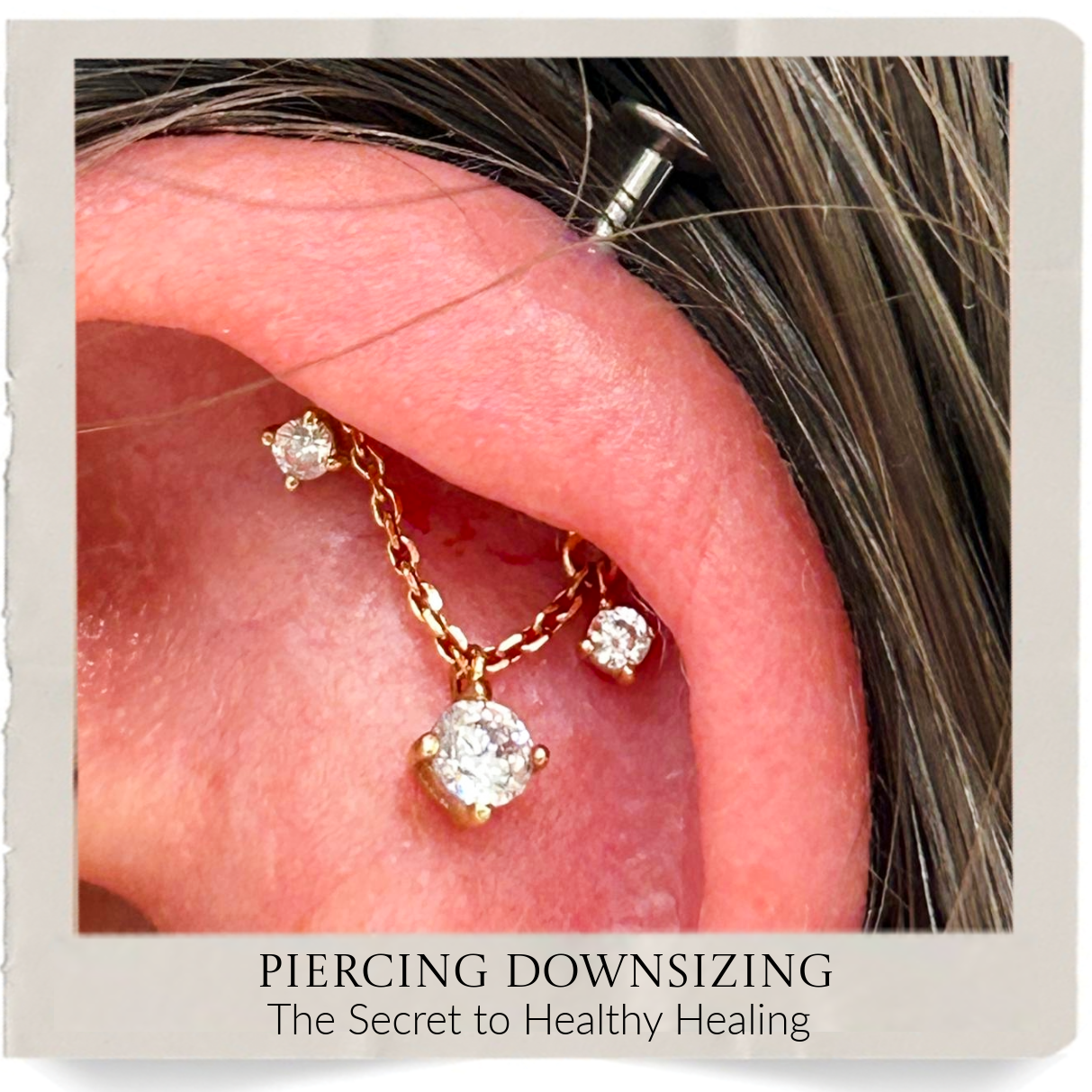
The Secret to Healthy Healing: Why (and When) You Need to Downsize Your Piercings
So, you recently got a fresh piercing. You’re following your saline spray routine to a T, keeping your hands off it, and admiring how cute it looks in the mirror. But a few weeks in, your piercer told you to come back for a check-up to downsize your jewelry.
If you’re wondering why you need to swap out jewelry that seems to be doing fine—or how long your specific piercing will take to heal—you’re not alone. Downsizing might feel like an extra step, but professional studios emphasize it as a crucial, non-negotiable part of the healing journey.
Here is everything you need to know about why downsizing matters, what happens if you skip it, and the exact downsizing and healing timelines for various piercings.
What is "Downsizing"?
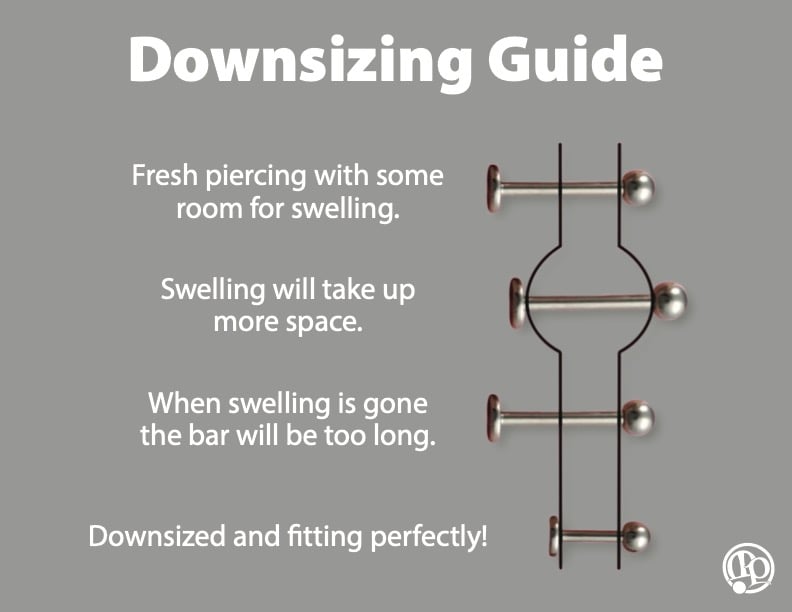
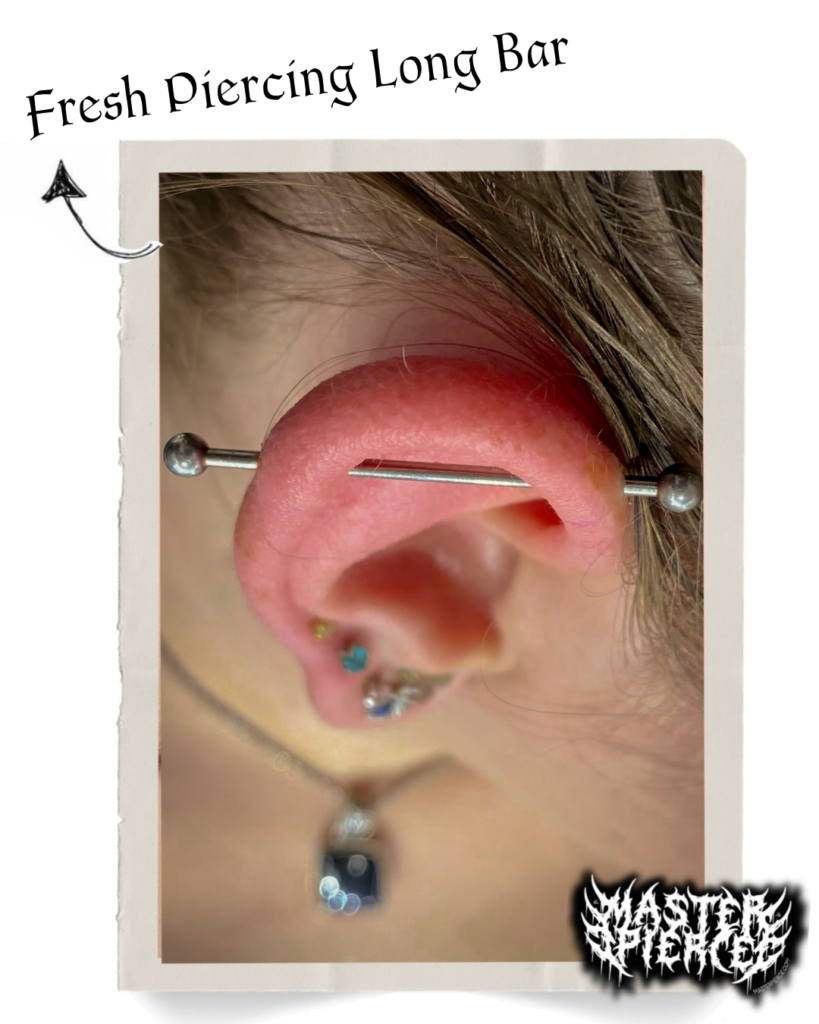
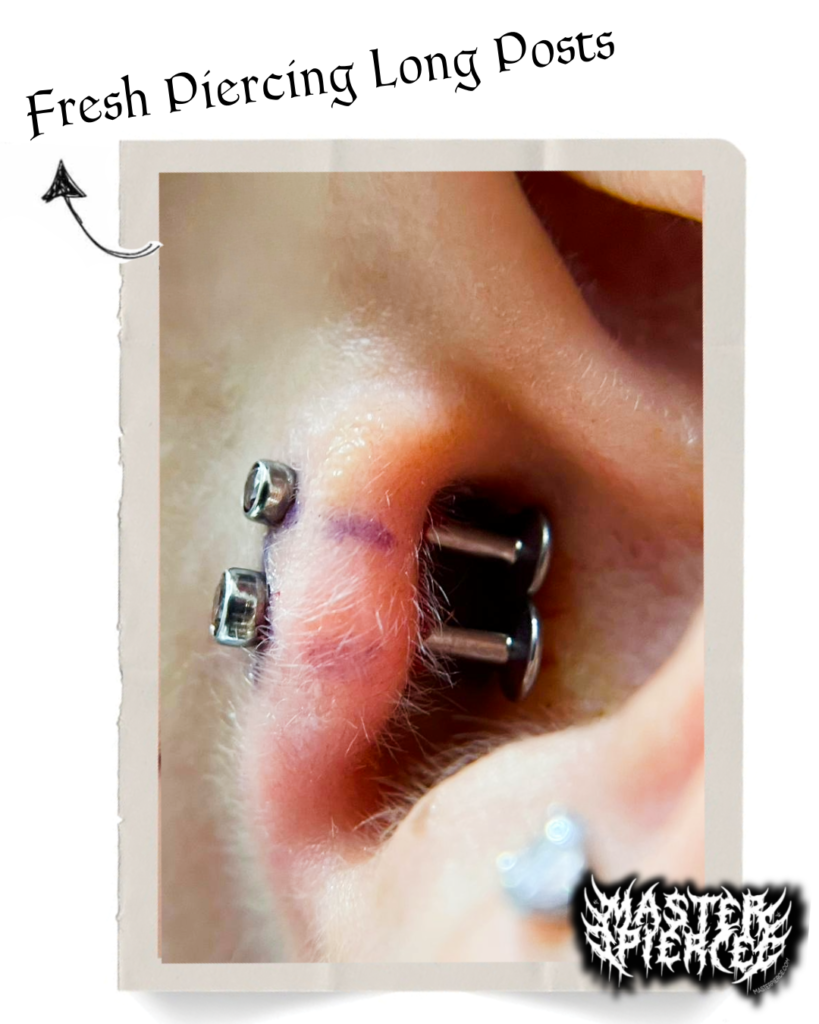
When you first get pierced, your piercer intentionally installs a longer post or larger initial ring to safely allow room for initial tissue swelling. Without that extra length, early inflammation could cause the jewelry to squeeze or embed into the healing tissue.
However, that long post isn’t meant to stay in forever. A downsize is a quick check-up where you return to your piercer after initial swelling subsides to replace that long initial bar with a shorter, snugger post tailored to your anatomy.
Why Is Downsizing So Important?
Leaving initial long jewelry in for too long creates unnecessary leverage and movement. Once swelling goes down, that extra post length causes several key issues:
• It Prevents Piercing “Migration” & Crooked Angles: Long posts act like levers. Sleeping on them or bumping them exerts constant pressure on the delicate healing tissue, which can permanently shift the angle of your piercing so it never sits flat again.
• It Prevents Irritation Bumps: Bumps and fluid pockets are frequently triggered by excess movement. Long bars slide back and forth through the fresh wound, aggravating tissue. Downsizing stabilizes the post so your body can focus on
building a stable piercing channel.
• It Prevents Accidental Snags: Long posts easily catch on clothing, hairbrushes, towels, and bedding. Every accidental yank pulls on the fresh wound and delays healing.
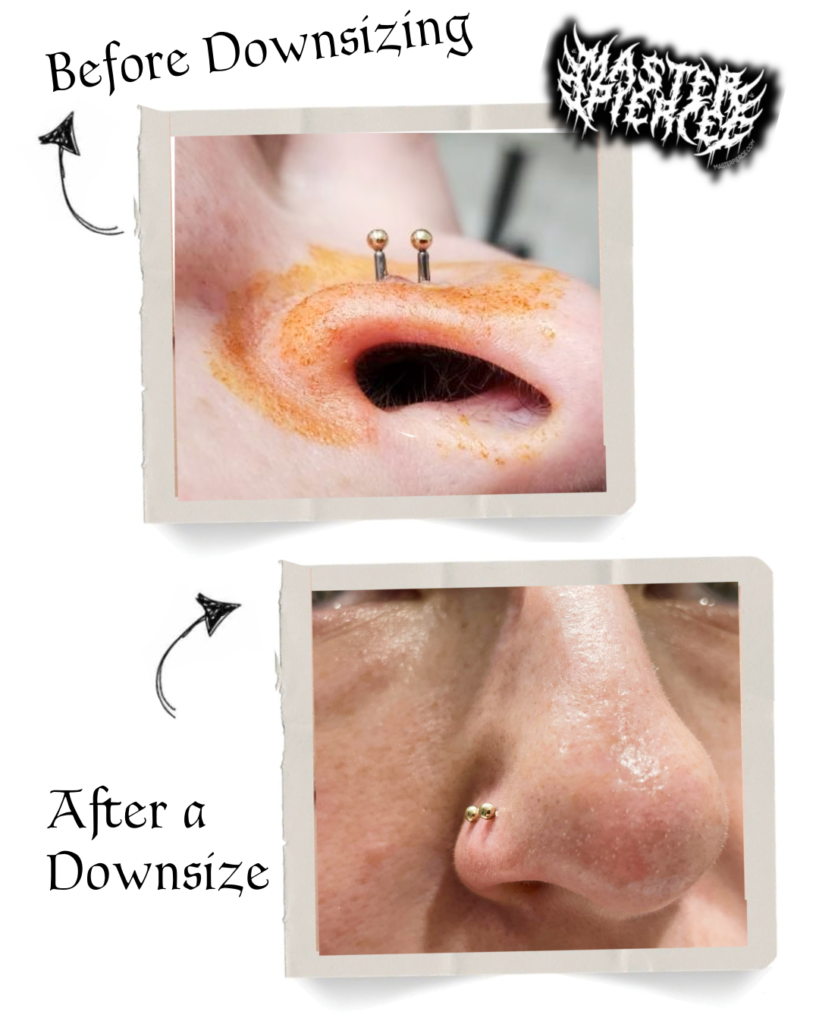
Downsizing & Healing Timeline Guide
Every piercing site heals at a different rate, and some surface-based piercings don’t require downsizing at all. Here is a breakdown of standard downsizing windows and total healing times based on studio data:
EAR PIERCINGS
• Standard Earlobes: Downsize at 2–4 weeks | Total Healing: 6–8 weeks
• Orbital Piercings: Downsize at 2 months | Total Healing: 6–9 months
• Vertical Industrial: Downsize at 2 months | Total Healing: 1.5–2 years
FACIAL & NOSE PIERCINGS
• Mantis (Forward Nostrils): Downsize at 2 months | Total Healing: 6–9 months
• Rhino (Vertical Nose Tip): Downsize at 2 months | Total Healing: 6–9 months
• Austin Bar & Nasallang: Downsize at 2 months | Total Healing: 6–9 months
ORAL & LIP PIERCINGS
• Tongue & Venom Piercings: Downsize at 1 week | Total Healing: 6–8 weeks
• Dahlia & Inverted Vertical Lips (Vempire): Downsize at 2 months | Total Healing: 3–6 months
• Cheeks (Dimples): Staged downsizing (12G to 10G) within 4 months | Total Healing: 9–12 months4. Body, Surface & Dermals
• Inverse Navel: Downsize required | Total Healing: 6–9 months
• Nipple Piercings: Downsize required | Total Healing: 6–9 months
• Surface Piercings (Anti-Eyebrow, Nape, Chest, Sternum, Hips): Downsize Not Required | Total Healing: 6–9 months
• Microdermals & Double Dermals: Downsize Not Required | Total Healing: 6–9 months
GENITAL & UNISEX PIERCINGS
• VCH, HCH, Labia, Prince Albert, Frenum, Lorum, Hafada, Dolphin & Male Pubic: Downsize at 2 months | Total Healing: 4–6 months
• Christina, Reverse PA, Apadravya, Ampallang, Guiche & Coccyx: Downsize at 2 months | Total Healing: 6–9 months
Trust the Healing Process. Trust Your Piercer.
Getting pierced is only the beginning—the way you care for your piercing throughout the healing process matters just as much. Proper downsizing at the right time can help reduce unnecessary movement, snagging, irritation bumps, and migration while giving your piercing the best environment to heal properly.
Is it time to downsize your jewelry?
Don’t guess or try to change a healing piercing on your own. Stop by Master Pierce and let one of our professional piercers evaluate your piercing, check your healing progress, and determine whether you’re ready for a shorter, properly fitted post.
A quick check-in today can make a big difference in how beautifully your piercing heals. ✨
FREQUENTLY ASKED QUESTIONS
No. Surface piercings (like surface eyebrows, nape, chest, sternum, and hips) and microdermals do not undergo traditional downsizing. They use fixed anchors or surface bars designed to remain in place throughout their 6–9 month healing period.
Oral tissue swells significantly and very rapidly after a piercing, but it also reduces swelling much faster than outer skin. Downsizing a tongue or venom piercing at the 1-week mark is crucial to prevent the long bar from damaging teeth, irritating gums, or being accidentally bitten.
It is strongly recommended to have a professional piercer perform all downsizes. Fresh piercing channels shrink and close within minutes if left empty, and forcing a post through half-healed tissue can cause severe trauma, crooked alignment, or infection.
The initial piercing fee covers the procedure, but the shorter replacement post is typically a separate small charge unless included in a studio package. However, re-using your original decorative top/end keeps the cost minimal.