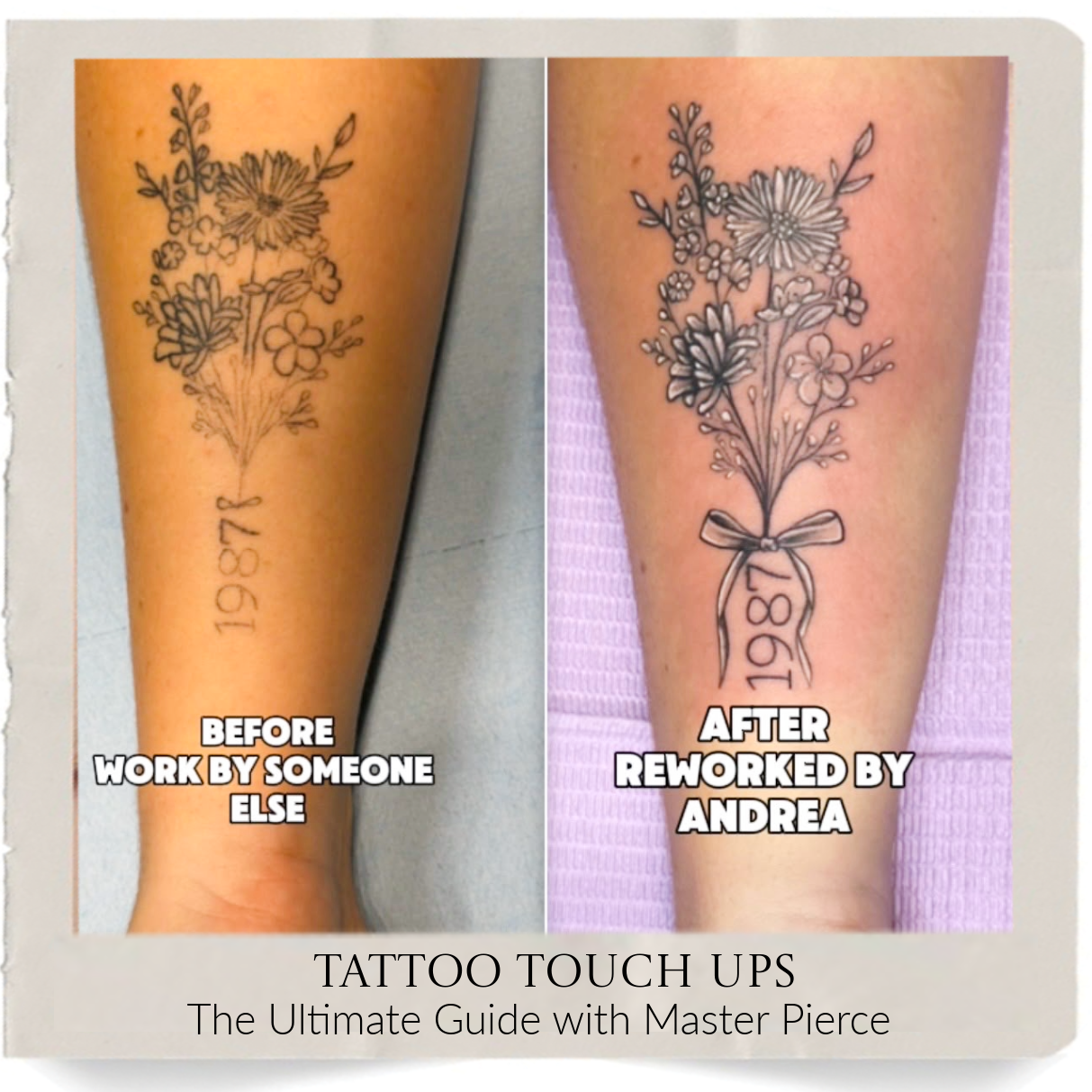
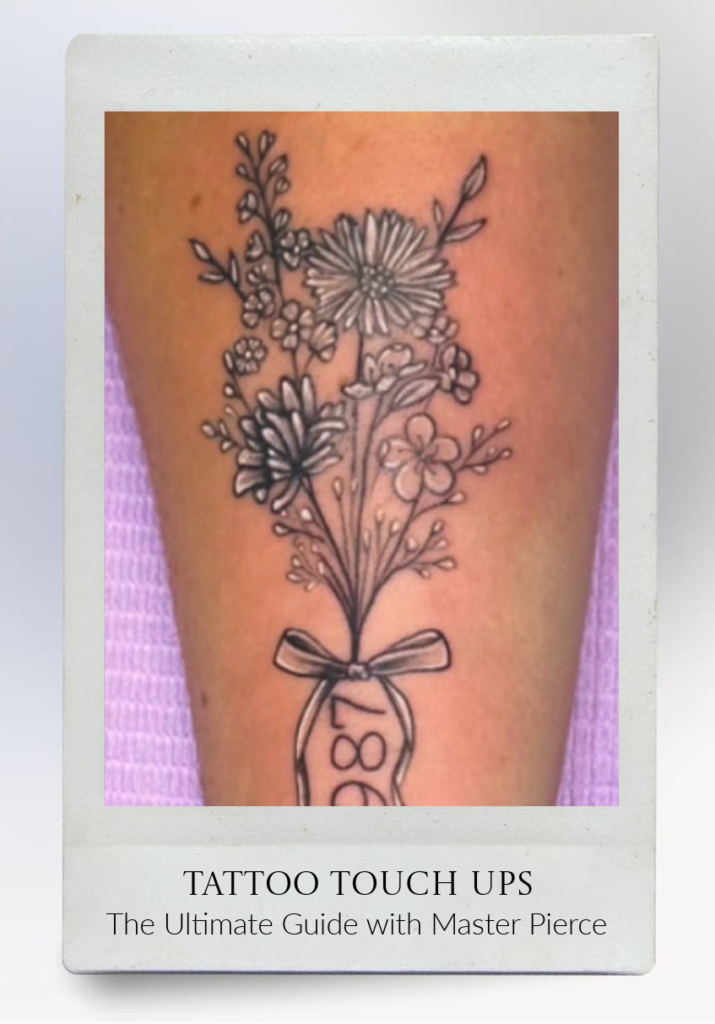
Even the best-crafted body art changes over time. At Master Pierce, we view tattoos as a living, enduring part of your personal body decor, but skin changes, sun exposure, and the natural aging process can cause your favorite ink to fade, blur, or lose its original punch.
What Is a Tattoo Touch-Up?
A tattoo touch-up is a minor session with an artist designed to restore, sharpen, or correct an existing piece of body art. Unlike a full cover-up or a brand-new tattoo, a touch-up works directly over your established lines and shading. The artist goes back into the skin to reinforce faded areas, straighten wobbling lines, or punch fresh, vibrant pigment back into spots where the body’s immune system naturally broke down or rejected the ink during the initial healing process.
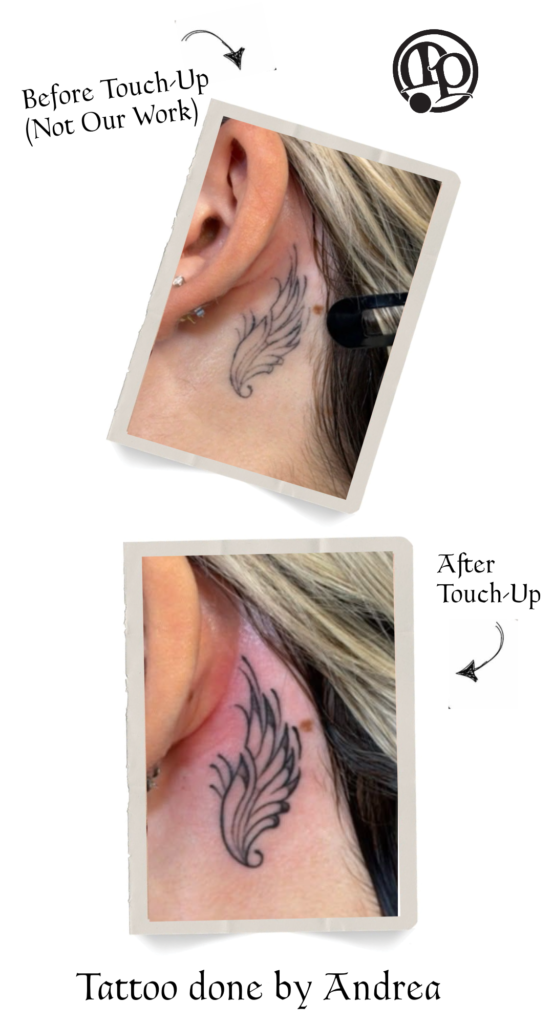
How Long Should You Wait Before Getting a Touch-Up?
Patience is vital when it comes to modifying freshly inked skin. If you are looking at a brand-new piece, you must wait a minimum of 4 to 6 weeks before booking any touch-up work.
While the surface of the skin might look healed after a couple of weeks, the deeper dermal layers are still actively repairing themselves and settling the pigment. Poking needles into skin that hasn’t fully regenerated can cause severe trauma, scarring, and pigment blowout. For best results, give your skin a full 2 to 3 months to completely settle so your artist is working on a stable, fully healed canvas.
How to Tell If Your Freshly Healed Tattoo Needs a Touch-Up
Once your new tattoo has cleared the initial healing phase, it is time to inspect your artist’s handiwork. Minor dropouts can happen to anyone, even with immaculate aftercare. Look closely in natural light for these telltale signs:
- Spotty or Patchy Lines: You notice small, faded gaps where a line completely dropped out or looks significantly thinner than the rest of the stroke.
- Uneven Color Saturation: Certain areas of color or solid black shading look lighter, greyish, or mottled compared to adjacent packed areas.
- Scabbing Accidents: If you accidentally caught a scab on your clothing or experienced heavy flaking during week two that pulled a chunk of pigment away with it, you will likely see a naked skin patch underneath.
If you spot these issues within your studio’s warranty window (most reputable shops offer complimentary touch-ups for fresh healing flaws within the first 6 to 12 months), reach out to your artist to schedule a quick fix.
Why Older Tattoos Need Touch-Ups
Tattoos undergo daily wear and tear from environmental factors and biological processes as the years roll on. Several common culprits drive the need for a secondary session down the road:
- Sun Exposure: Ultraviolet rays break down tattoo pigment molecules over time, turning deep blacks greyish-blue and washing out bright colors.
- Natural Skin Aging: As skin elasticity shifts and regenerates over the years, lines naturally expand, soften, or blur slightly.
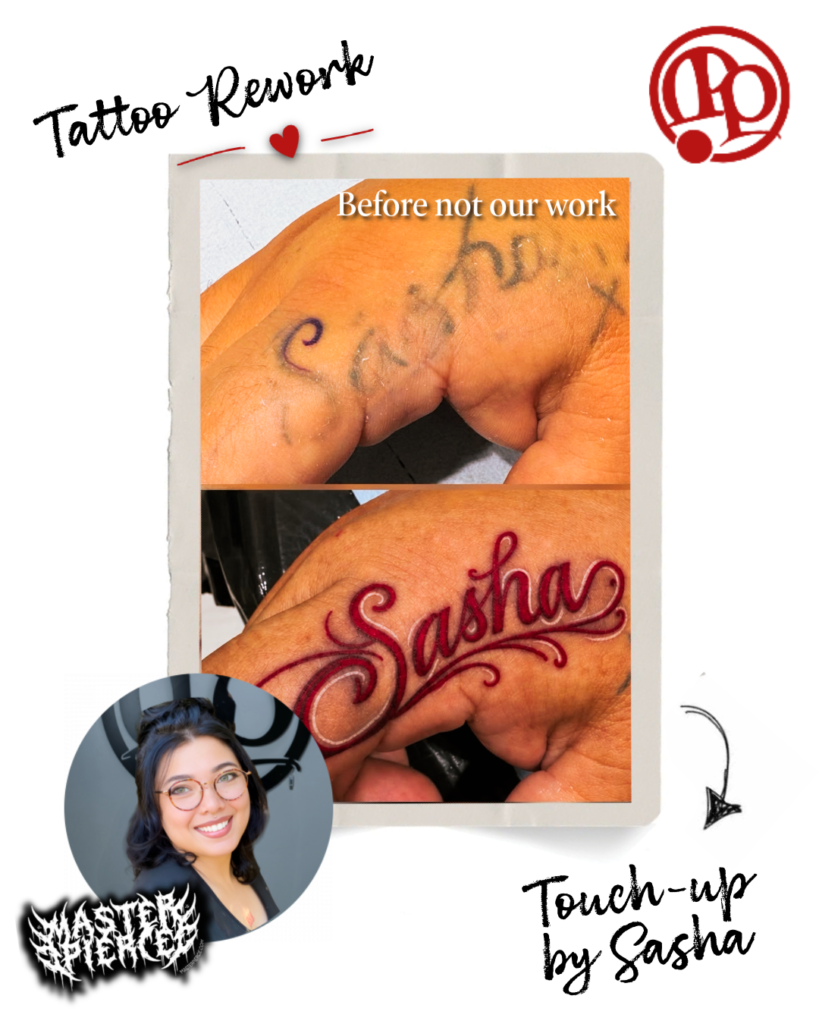
- High-Friction Areas: Tattoos on hands, feet, fingers, elbows, or ribs experience constant movement and friction, causing ink to fall out or fade much faster than on protected areas like the chest or back.
Breathing New Life Into an Old, Dated Tattoo
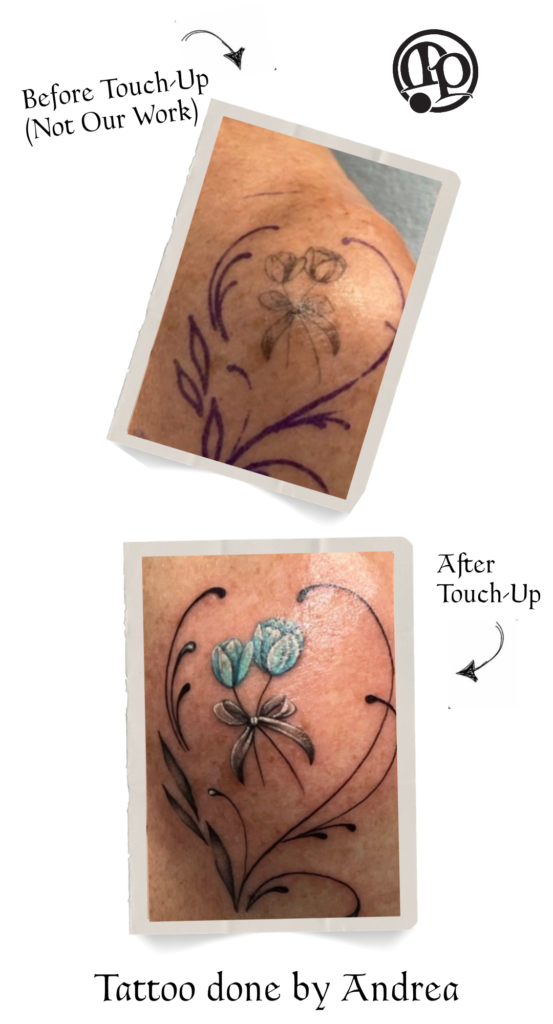
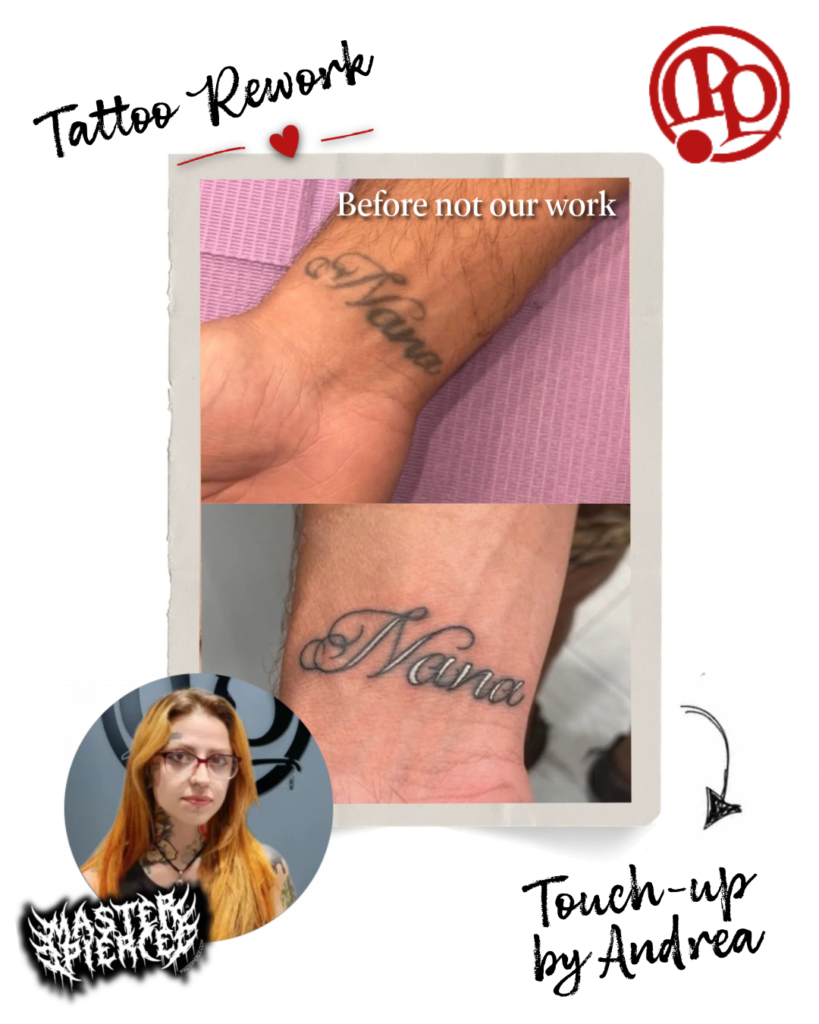
An aging tattoo doesn’t have to stay dull or embarrassing. A smart touch-up session can completely resurrect a piece you got years ago without losing its original sentimental value.
Artists can use line weight re-definition to instantly sharpen a faded design, making the overall piece pop the way it did on day one. Adding contrast and highlights—such as dropping bright white or fresh saturated color into key areas—creates a modern 3D depth that pushes tired, flat lines into the background. For truly dated styles, a touch-up can double as a subtle redesign or “blastover,” incorporating fresh background shading, dynamic stippling, or framing elements that drag an old-school piece squarely into a modern aesthetic.
If your body art is looking tired, patchy, or faded, bring it into Master Pierce. Our artists can evaluate your ink and map out a refresh strategy to make it look brand new again.
FREQUENTLY ASKED QUESTIONS About Tattoo Touch-Ups
Look for signs like ink fading, blurred edges, patchy spots where color dropped out, or a general lack of contrast compared to when it was first done.
Touch-up policy’s are dependant on each artist so be sure to ask their policy! For older tattoos looking for a refresh they are usually a shop rate just like other tattoos.
Generally, a touch-up hurts less because the lines are already there and the session is much shorter. However, it can still be sensitive since the artist is working over skin that has already been tattooed.
You must wait at least 4 to 6 weeks, though waiting up to 2 or 3 months allows the dermal layers to fully settle before reintroducing needles.
Minor blowouts can sometimes be masked with clever shading or background elements, but severe mistakes usually require laser removal or a creative cover-up rather than a standard touch-up.
Yes. Reintroducing fresh, high-quality pigment over faded areas will instantly restore vibrancy, especially if you have protected the skin from ongoing sun damage.
Treat it just like a regular tattoo appointment: get a good night’s sleep, eat a solid meal beforehand, stay hydrated, and avoid drinking alcohol or taking blood thinners the night prior.
A touch-up works within the framework of your existing piece. While minor stylistic updates and additions can be made, a total transformation usually requires a cover-up or blastover.
Treat it like a fresh tattoo. Keep it clean, apply a thin layer of recommended aftercare ointment, avoid soaking it in water, and strictly stay out of the sun until it heals.
The single best way to protect your refreshed ink is daily sunscreen application (SPF 30 or higher) whenever the tattoo is exposed to UV rays, combined with keeping your skin well-moisturized.