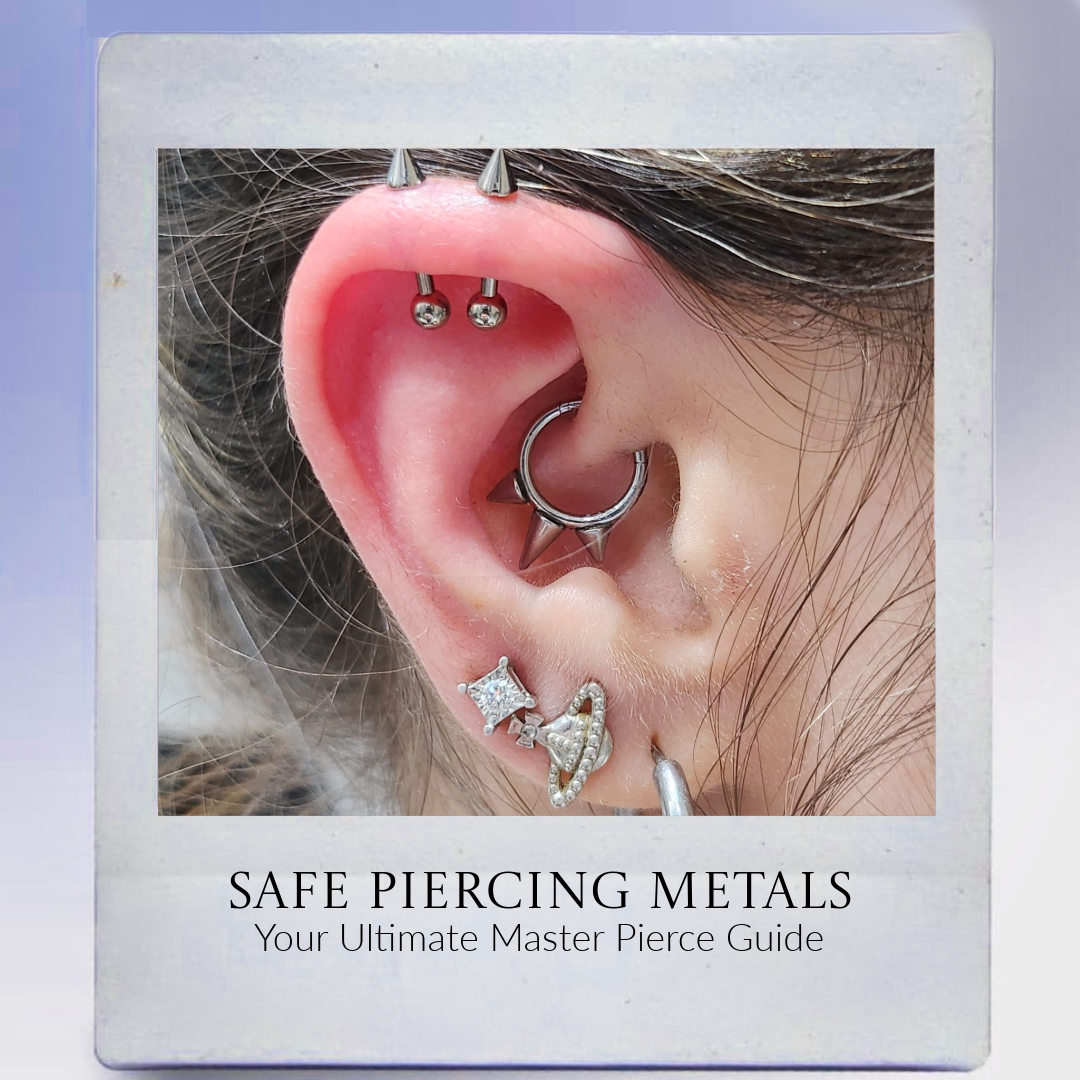
Getting a new piercing is an absolute vibe, but choosing the right metal matters way more than you might think!
Because a fresh piercing is essentially a tiny open wound, whatever material touches your skin gets a direct backstage pass to your body tissue. Choosing low-quality metals can trigger immune responses, drag out your healing time, cause infections, or leave you with permanent scarring. To ensure your healing journey is smooth sailing, let’s dive into what’s actually safe to put in your body and what needs to stay far, far away from your skin.
The Danger of “Surgical” and “Stainless” Steel
Let’s be real. Alot of studios carry these two metals. Not us! We care about the metals that go into your body! Let’s look at a few things when it comes to surgical and stainless steel.
• The Nickel Trap: “Surgical” and “stainless” steel typically contain between 8% and 12% nickel. Fun fact: nickel allergy is the most common metal sensitivity on earth, affecting 10% to 20% of people.
• The Slow Leaching Process: When steel sits in a fresh, raw piercing, it leaches nickel directly into your skin. This leads to that annoying, constant itching, mysterious rashes, and stubborn “piercing bumps.” Even if you don’t have an allergy right now, prolonged contact with steel can actually cause you to develop a permanent nickel sensitivity over time.
• The Lie: “Surgical steel” sounds high-grade and medical, but it’s just a slick marketing phrase. There is no single standard for its composition, meaning it often hides random amounts of chromium, carbon, and other irritants.
Let’s be real: these materials belong in kitchen sinks, not your beautiful body.
The Master Pierce Approved List: Safe, High-Quality Metals
We love your skin too much to compromise. That’s why we only use materials approved by the Association of Professional Piercers (APP). Here’s the good stuff we stock our cases with:
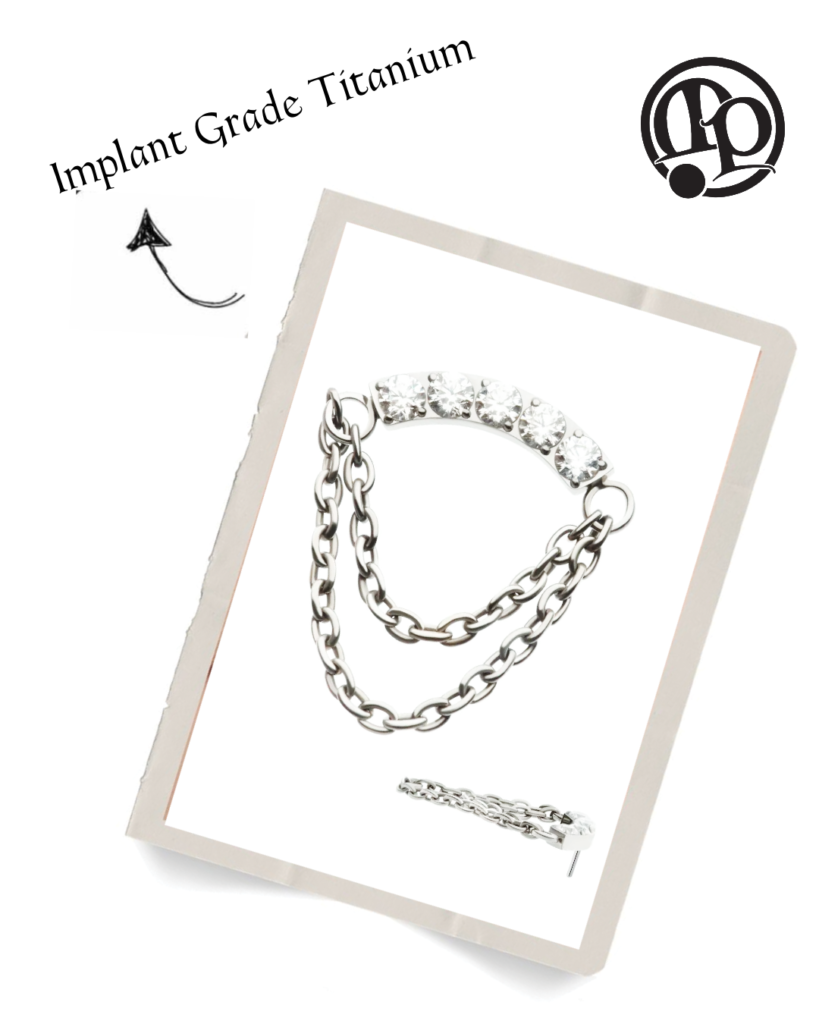
✨ Implant Grade Titanium
Titanium is the absolute gold standard of the piercing world. It is completely hypoallergenic, ultra-lightweight, and will never corrode or tarnish inside your body.
We use specific Implant-Grade titanium (ASTM F136). This is the exact same biocompatible material used for medical joint replacements and dental implants. If it’s safe enough for a hip replacement, it’s perfect for your ear!
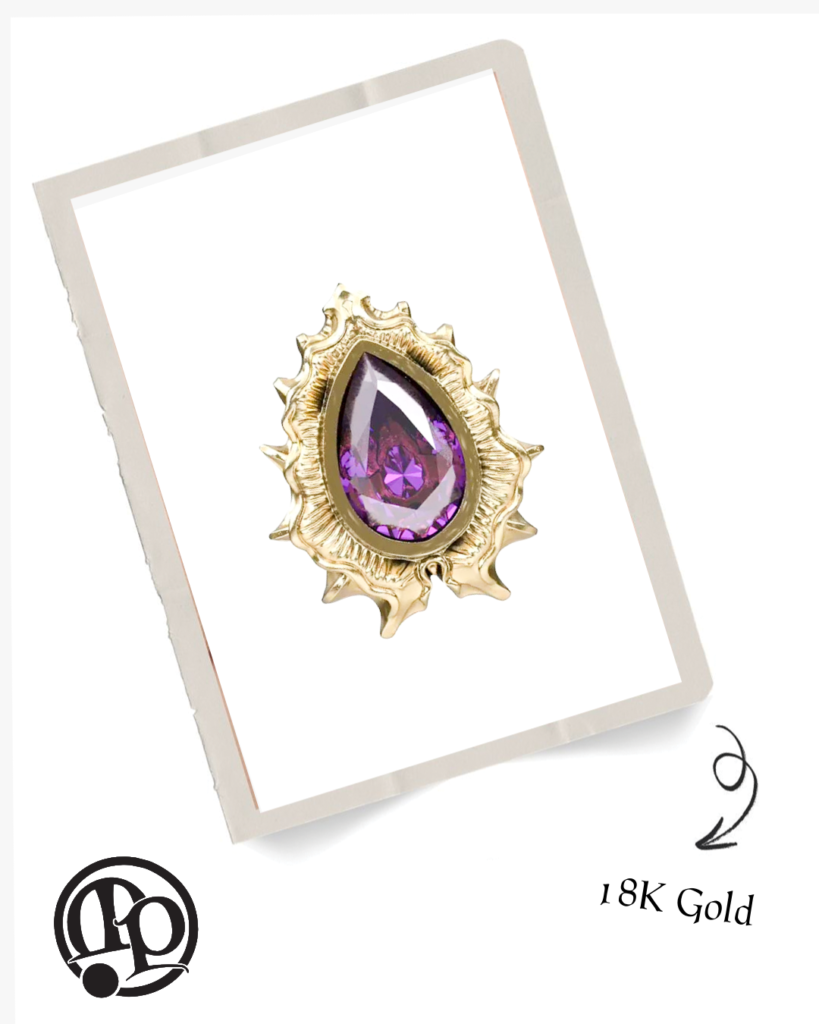
✨ Solid Gold (14k vs 18k)
Real yellow, white, and rose gold make stunning choices for piercings, provided they are strictly certified nickel-free.
When browsing our collection, you’ll see two options, and
here is how they differ:
• 14K Gold: This contains 58.3% pure gold alloyed with other secure metals. Because it has a lower pure gold content, it is stronger, highly durable, and very resistant to scratches. It’s fantastic for everyday wear and initial piercings.
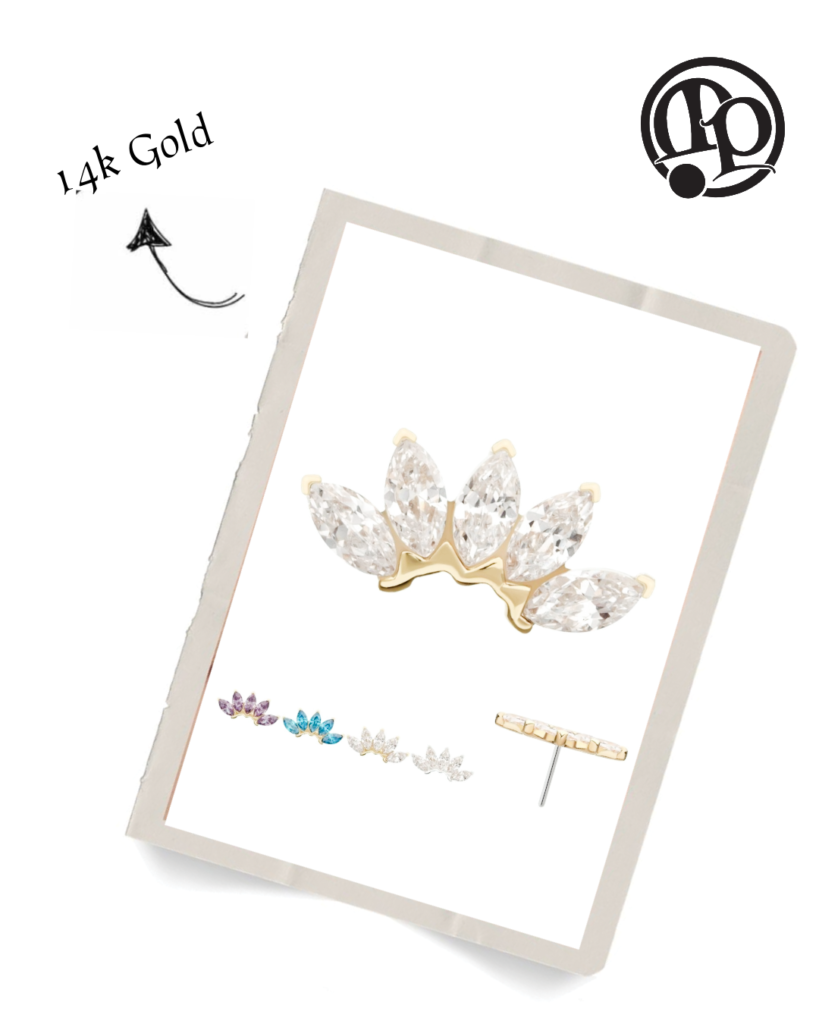
• 18K Gold: This contains 75% pure gold, giving it a noticeably richer, warmer golden hue. Because pure gold is naturally a soft metal, 18K is slightly softer than 14K. It feels incredibly luxurious and is a gorgeous choice, but requires a little extra care to
avoid surface scratches.
✨ Niobium
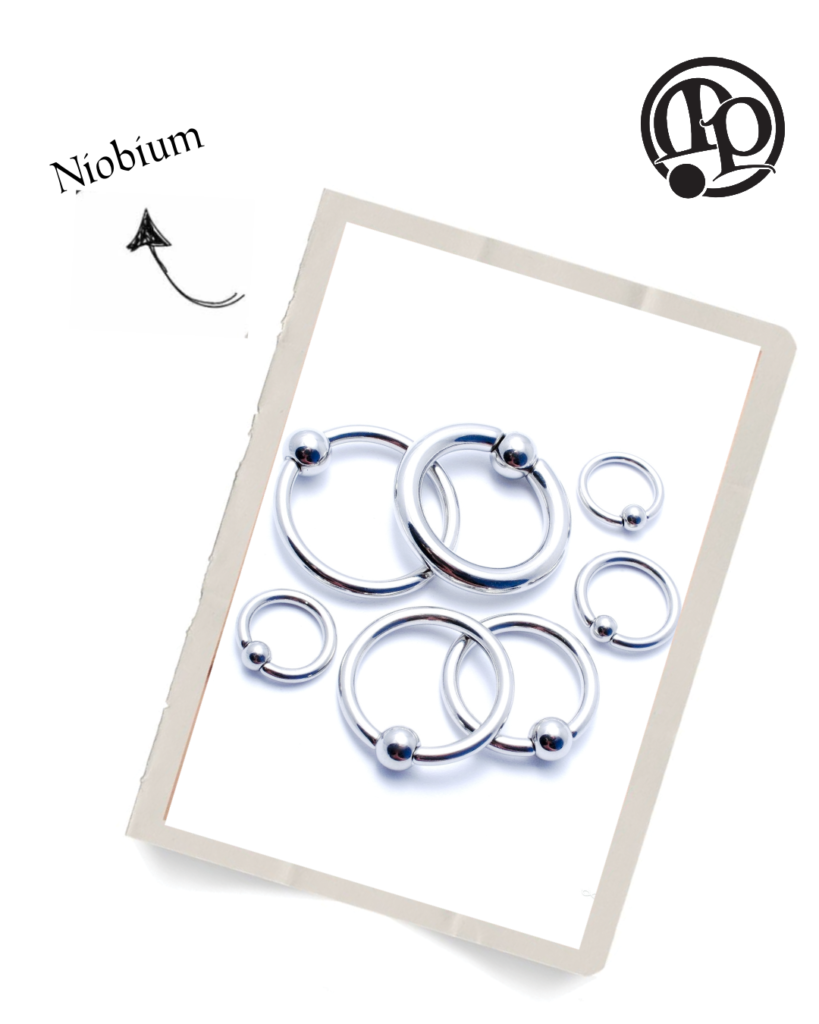
Meet titanium’s cool cousin. Niobium is a pure elemental metal (meaning no weird alloys mixed in), making it 100% hypoallergenic and incredibly resistant to corrosion. It’s slightly softer and heavier than titanium, and it can be safely anodized into a spectrum of gorgeous
colors! ( We love to Anodize!)
 High-Quality Black PVD (Physical Vapor Deposition)
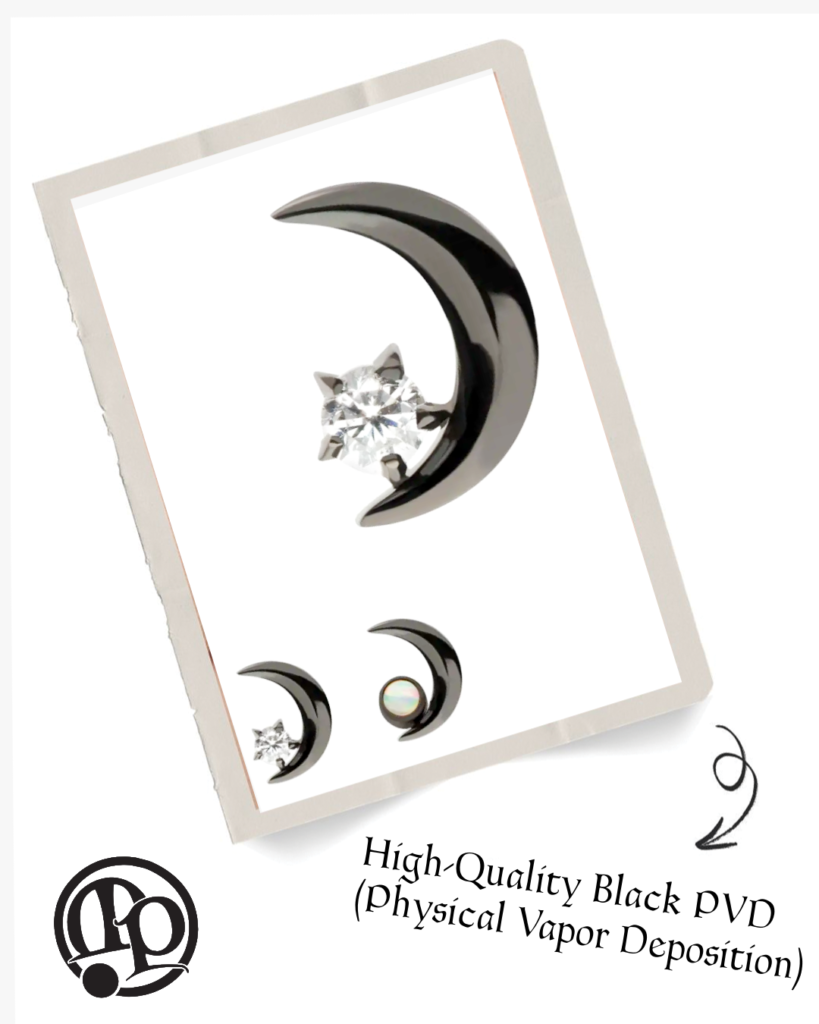
We carry high-quality black PVD jewelry at Master Pierce also PVD is an advanced bonding process that applies a sleek, jet-black layer over biocompatible metals like implant-grade titanium. While this method creates an ultra-durable, body-safe finish for healed styles, we choose to reserve our black PVD pieces strictly for fully healed piercings rather than fresh ones to give your new piercing the absolute cleanest, smoothest start possible and a happy heal.
The Forbidden Zone: Metals and Coatings to Avoid Completely
• Sterling Silver: Keep the silver for your rings and necklaces! Silver constantly reacts with body fluids and tarnishes. This tarnishing process releases particles that can permanently stain your skin a dull black or grey (a condition called argyria) and trigger nasty infections.
• Plated Metals: Gold-plated or silver-plated jewelry is just a micro-thin layer of shiny metal over a cheap base like brass or copper. The plating flakes off incredibly fast inside a fresh piercing, exposing your raw tissue to toxic, reactive alloys.
• Acrylic and Plastic: Plastics are incredibly porous. They harbor bacteria in microscopic scratches that you can’t ever truly clean, and they leach chemical stabilizers directly into your body. No thanks!
FAQs: Quick Answers from the Pros
Can I use surgical steel if I’ve never had a metal allergy before?
We highly recommend against it. Nickel allergies can develop at any point in your life due to repeated exposure. Because a fresh piercing is an open channel, it acts as a major catalyst for metal sensitization. Starting out with titanium is the best way to safeguard your health.
How can I get a safe, jet-black look for a fresh piercing?
If you want that dark, edgy look right away for a fresh piercing, choose Niobium. Because it can be safely anodized to a deep, reflective black finish naturally, it is 100% perfect for initial, healing piercings. Once you are fully healed, you can open up your options to our amazing collection of black PVD jewelry!
Where can I get safe piercing?
Did you know Master Pierce is APP Certified? It is best to find an APP Certified Studio in your area! Visit safepiercing.org to locate the closest shop to you!
What metal should i get pierced with!?
• Implant-Grade Titanium (ASTM F136)
• 14K and 18K Solid Gold ( White, Gold, Rose)
• Platinum
• Niobium
• High-Quality Black PVD (Physical Vapor Deposition over a biocompatible base metal, reserved for fully healed piercings)
Is it safe for me to get pierced with Stainless Steel?
Stainless steel belongs in kitchen appliances, not your body! Unless it is strictly certified as implant-grade (ASTM F136), standard stainless steel contains high amounts of nickel (usually 8% to 12%). Because a new piercing is an open wound, your body absorbs these metals, which can cause intense itching, severe redness, and those dreaded piercing bumps. Even if you don’t have a metal allergy now, prolonged exposure to stainless steel inside a healing wound can actually trigger a permanent, lifelong nickel allergy. It’s always safer to stick to implant-grade titanium or niobium for a smooth, happy heal!
How can I verify that my jewelry is actually high quality?
Never be afraid to ask your piercer questions! A reputable studio will happily show you the jewelry’s mill certificate, proving the metal meets ASTM F136 (titanium) implant standards. You should also check the design: quality pieces are always internally threaded or threadless (press-fit) so smooth metal passes through your skin, rather than sharp, jagged external screw threads.
Can I wear sterling silver in a fully healed piercing?
What should I do if my piercing is reacting to the metal?
If you notice escalating redness, intense itching, heat, or persistent swelling, swing by Master Pierce right away. Don’t pull the jewelry out yourself—if there’s a brewing infection, closing the hole can trap it inside. Let one of our pros assess it and safely swap it out for implant-grade titanium.