

Hello class, and welcome to the first session of our tattoo history series. In this series, we will explore the origins of tattoos, cultural traditions, and the evolution of tools and inks. Our first topic is: Who was the first person to be tattooed? Please hold your questions until the end of the lesson and share your comments below.
For thousands of years, people have permanently marked their bodies with tattoos. Tattoos once carried deep meaning, symbolizing wealth, religious beliefs, love, or even punishment. The oldest known tattooed human lived between 3370 BC and 3100 BC—over 5,000 years ago. This preserved body is known as the “Iceman,” a nickname given because of where he was discovered.
On September 19, 1991, two German tourists found the Iceman, later named Ötzi, on the Fineilspitze in the Ötztal Alps along the Austrian–Italian border. His naturally preserved body revealed 61 tattoos in varying shapes and designs, most of them concentrated on his legs.
Archaeologist Konrad Spindler studied Ötzi’s body in detail and discovered that the ink came from soot and fire ash—a surprisingly simple but effective method. These findings give us the earliest physical evidence of tattooing as both an art form and a ritual practice.

Throughout history, many different eras and ages have used tattoos for various purposes. Across time, tattoos have served as cultural symbols, spiritual marks, and personal identifiers.
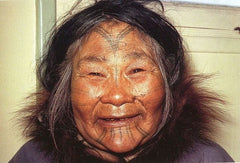
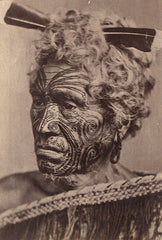
So far, archaeologists have discovered around 50 tattooed mummies and preserved human remains. These findings span across multiple regions worldwide. Notable discoveries have been recorded in Germanic and Celtic tribes, Egypt, India, Mongolia, the Philippines, and Greenland.
Some of these remains date back as far as 2300 BC. Each discovery connects tattoos to different periods of ancient history, showing how body art evolved across civilizations.

This concludes today’s lesson. Our next class will continue on February 19th, 2020, so feel free to revisit this post for a quick summary beforehand.
As many of you know, Ancient Egypt marked another major era when tattoos held cultural importance. Egyptians often decorated their bodies with intricate markings, and this practice appeared most commonly among women.
When archaeologists discovered female mummies with tattoos, many male excavators dismissed the findings. They assumed the women were of “dubious state” and labeled them “dancing women.” However, evidence tells a different story. These women were buried at Deir el-Bahari, a site reserved for royals and elites, showing that tattoos held much deeper significance than those early assumptions suggested.
Further studies revealed that one woman, originally described as the “Royal Concubine,” was actually Amunet, a Priestess of the goddess Hathor at Thebes.
Amunet’s body was found with several tattooed markings. These tattoos showed a striking resemblance to the patterns seen on Middle Kingdom faience figurines, confirming their symbolic and cultural importance.
